
What to visit in Lisbon — Complete guide
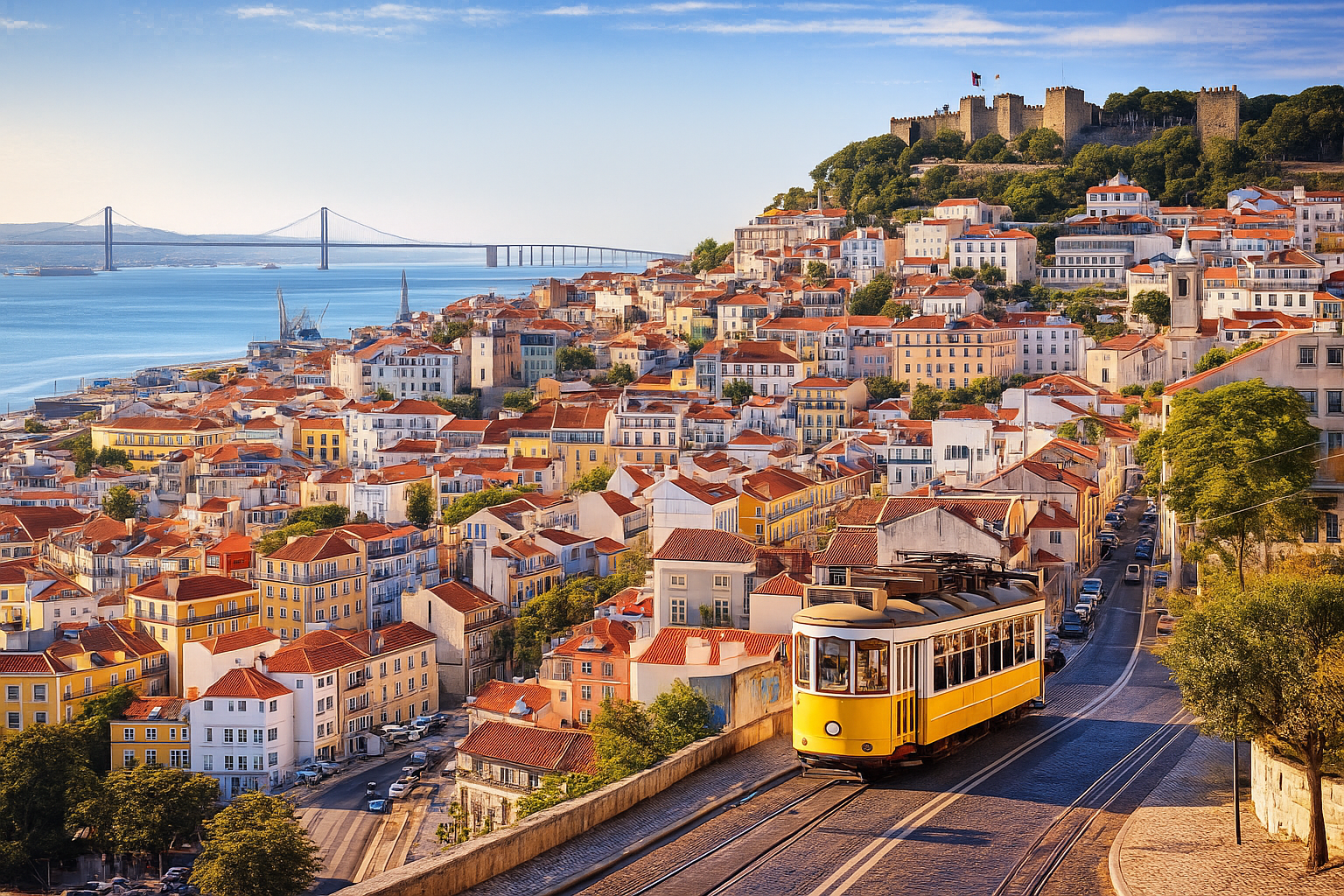
Lisbon is a city of viewpoints, historic hills, yellow trams, tiled façades and wide views over the Tagus river. If it is your first time in the city, it can be hard to decide what to visit in Lisbon in just a few days.
This guide brings together the main places to visit in Lisbon, organised by area, and also shows how ONDEBUS can help you move between each point using only public transport.
1. How to use this guide
To make things easier, we grouped the places by city areas and then suggest mini-itineraries for 1, 2 and 3 days. In many sections you will also find links to our “How to get to” guides if you want more detailed directions.
Whenever you want to know the best way to reach a place, you can:
- Use the ONDEBUS planner button at the end of this article, or
- Type the place name directly into ONDEBUS and let the system calculate the best combination of Metro, CP Urbanos, Carris and Carris Metropolitana.
2. Historic centre and viewpoints
The historic centre is the perfect starting point to discover Lisbon on foot and by public transport.
- Baixa and Praça do Comércio — Lisbon’s “living room”, opening onto the Tagus river.
- Rossio — one of the busiest squares, with Metro and train connections.
- Chiado — elegant streets, cafés and historic shops.
- Alfama — narrow streets, colourful houses and traditional atmosphere.
- Miradouro da Senhora do Monte — one of the widest views over Lisbon.
- São Jorge Castle — on top of the hill, with a panoramic view over the city centre.
For directions to some of these places, you can check:
- How to get to Alfama
- How to get to São Jorge Castle (Lisbon)
- How to get to Miradouro da Senhora do Monte
3. Belém — Monastery, tower and museums
The Belém area is a must-see in any Lisbon itinerary. It combines history, museums, modern architecture and, of course, the famous Pastéis de Belém custard tarts.
- Jerónimos Monastery — one of the main examples of Manueline architecture.
- Belém Tower — former defence tower on the river, now a Lisbon postcard image.
- MAAT — Museum of Art, Architecture and Technology, in a contemporary building by the river.
- Padrão dos Descobrimentos — monument celebrating the Portuguese Age of Discoveries.
- Pastéis de Belém — the original bakery, usually with a line at the door.
To plan your visit to Belém using public transport, you can follow:
- How to get to Jerónimos Monastery
- How to get to Belém Tower
- How to get to the MAAT (Lisbon)
- How to get to Pastéis de Belém
4. Parque das Nações and Gare do Oriente
Parque das Nações is the most modern area of Lisbon, by the Tagus river, with wide pedestrian spaces, cultural venues and views of the Vasco da Gama bridge.
- Gare do Oriente — main hub for long-distance trains, regional trains, Metro and buses.
- Lisbon Oceanarium — one of the largest aquariums in Europe, great for families.
- Pavilhão do Conhecimento — interactive science museum for all ages.
- Cable car — aerial views over the river and the riverside promenade.
- Riverside walk — ideal for walking, running or using scooters.
For detailed directions to this area, you can use:
- How to get to Parque das Nações (Lisbon)
- How to get to Gare do Oriente (Lisbon)
- How to get to Lisbon Oceanarium
- How to get to Pavilhão do Conhecimento
5. Typical neighbourhoods and local life
Beyond the big monuments, Lisbon is also discovered in its everyday neighbourhoods, where you feel the rhythm of cafés, street markets and local shops.
- Graça — hilltop neighbourhood with viewpoints and a local feel.
- Mouraria — narrow streets, mixed cultures and fado heritage.
- Campo de Ourique — residential area with independent shops and a food market.
- Marquês de Pombal & Avenida da Liberdade — central axis with hotels and flagship stores.
- Alcântara and riverside — more relaxed, with easy access by train and tram.
Some of these areas are covered in our “how to get to” guides, for example:
- How to get to Marquês de Pombal (Lisbon)
- How to get to Largo do Rato (Lisbon)
- How to get to Time Out Market Lisbon
6. Beaches and the Cascais line
One of Lisbon’s great advantages is how close it is to the sea. In less than an hour you can be in Cascais, Estoril or even at Cabo da Roca, the westernmost point of mainland Europe.
- Cascais — seaside town with beaches, a marina and an old town centre.
- Estoril — known for its casino, seafront promenade and Tamariz beach.
- Cabo da Roca — dramatic cliffs and wide ocean views.
Connections are mainly by CP Cascais Line trains and, afterwards, local buses.
7. Sintra and surroundings
Even though it is not Lisbon itself, Sintra is part of many itineraries for those visiting the capital. It is one of the most popular day trips from Lisbon.
- Pena Palace — colourful palace at the top of the hill.
- Sintra historic centre — narrow streets, traditional sweets and great views.
- Quinta da Regaleira — gardens, tunnels and iconic initiation wells.
To organise your visit, you can check:
8. Family-friendly activities
Lisbon has many attractions designed for those travelling with children or as a family.
- Lisbon Oceanarium — immersive tanks and ocean habitats.
- Pavilhão do Conhecimento — hands-on science museum.
- Lisbon Zoo — animals, an internal cable car and educational presentations.
You can combine these places with playgrounds, riverside walks and fun tram rides.
9. Nightlife, food and the urban vibe
At night, Lisbon has a different energy, with restaurants, bars, live music and riverfront terraces.
- Cais do Sodré — bars, restaurants and quick connections to public transport.
- Bairro Alto — narrow streets filled with small bars and music venues.
- Time Out Market — food hall with a wide variety of options in one place.
When combining nightlife and public transport, it is important to plan how you will get back to your hotel. ONDEBUS helps you see the best options using Metro, night buses and trains.
10. 1-day Lisbon itinerary — Essentials
If you only have 1 day in Lisbon, it is best to focus on the essentials and avoid changing areas too many times.
- Morning: Baixa, Praça do Comércio, walk up to Chiado and a viewpoint nearby.
- Lunch: Baixa area or Time Out Market.
- Afternoon: Belém (Jerónimos Monastery, Belém Tower, MAAT and riverside walk).
- Evening: return to the centre and dinner in Baixa or Cais do Sodré.
Use ONDEBUS to check which combination of Metro, tram, bus or train makes your day faster and more comfortable.
11. 2-day Lisbon itinerary
With 2 days, you can split the areas more calmly:
Day 1 — Historic centre and Belém
- Morning in Baixa, Rossio, Chiado and São Jorge Castle.
- Afternoon in Belém (Jerónimos, Belém Tower, MAAT, Pastéis de Belém).
Day 2 — Parque das Nações and viewpoints
- Morning in Parque das Nações (Oceanarium, Pavilhão do Conhecimento, riverside walk).
- Afternoon in viewpoints such as Senhora do Monte or Graça and the Alfama area.
12. 3-day Lisbon itinerary
With 3 days, you can also include a day trip outside the city centre:
- Day 1: Historic centre + viewpoints.
- Day 2: Belém + riverside area.
- Day 3: Parque das Nações or a day trip to Sintra or Cascais.
In these cases, ONDEBUS is especially useful to combine CP Urbanos trains, Metro and Carris Metropolitana buses on the same day, without needing a car.
Use ONDEBUS to build your Lisbon itinerary
Instead of trying to combine routes manually, you can use the ONDEBUS planner to see the best public transport connections between all these points of interest.
Open the planner and type the place you want to visit (for example “Jerónimos Monastery”, “Lisbon Oceanarium” or “Cais do Sodré”). Then tap “Find my location” to set your current starting point.
ONDEBUS automatically combines Metro, CP Urbanos, Carris, Carris Metropolitana and other operators, helping you plan a 100% public transport itinerary.